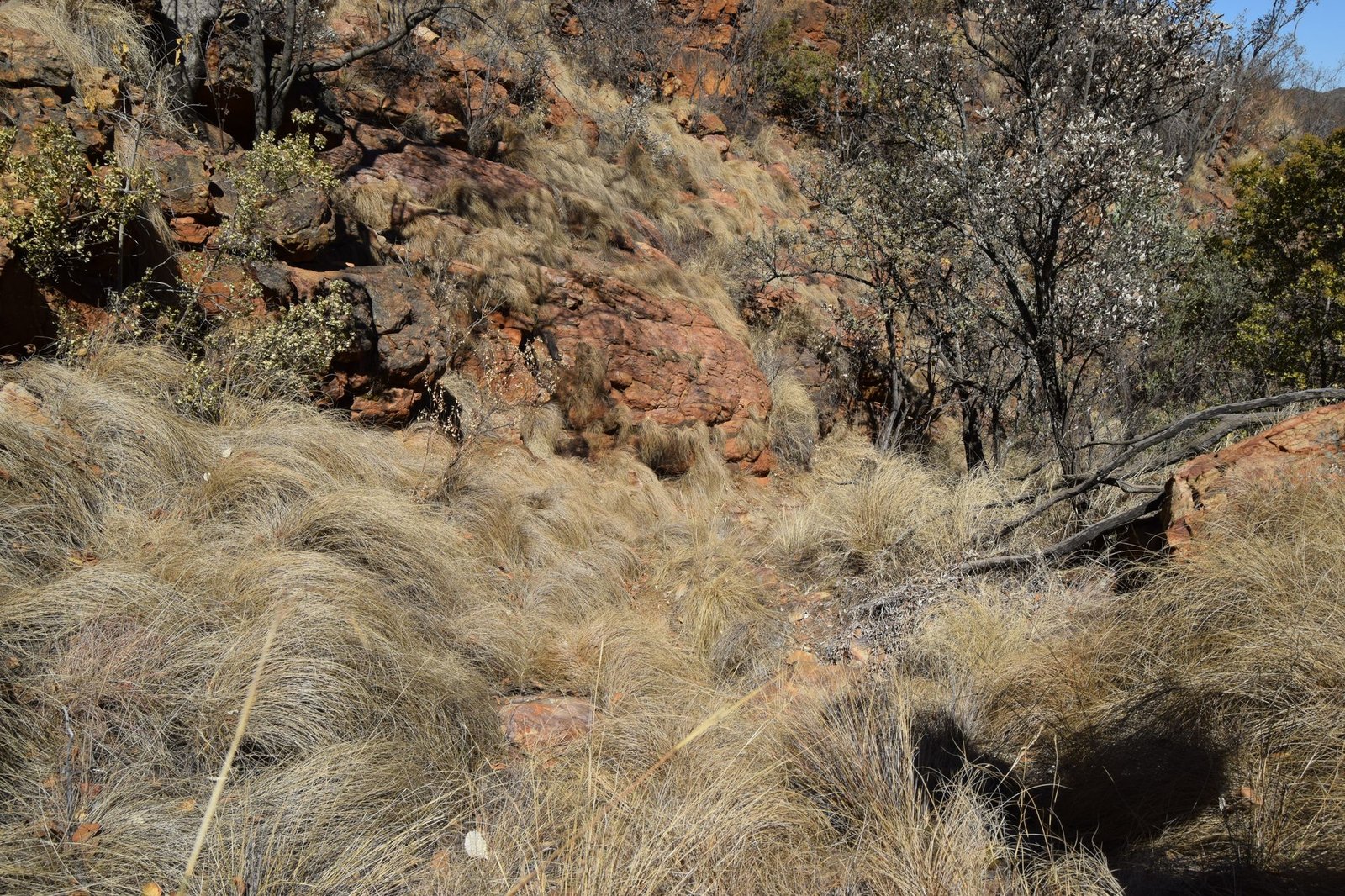
Fire on the highveld frightens people, and it should. But grassland here did not merely survive fire; it was built by it, along with grazing, over a very long time. Grassland that never burns does not stay as it is. It accumulates old, unpalatable material, loses the smaller plants that need light at ground level, and slowly gives way to woody encroachment. Protecting a grassland by keeping all fire out of it is one of the more effective ways to lose it.
So the question on the dome is never whether it burns. It is when, how hot, and how much at a time.
The management burn we want is early in the dry season, before the fuel is at its most cured, on a cool morning with moisture still in the air and a light, predictable wind. A fire like that moves at a walking pace, stays low, removes old material and leaves a mosaic behind — burnt patches next to unburnt ones. The mosaic is the whole point. Animals that cannot outrun a fire walk a few metres into unburnt grass. Insects survive in the gaps. The new green flush that follows draws grazers in and spreads the pressure off the areas that need rest.
The fire we do not want is the one that arrives in the worst weeks of the dry season, in high wind, through a fuel load that has been building for years or through an alien thicket. That fire crowns, jumps, kills trees that were centuries old, sterilises the top of the soil, and takes fences, infrastructure and sometimes livestock with it. It also does not leave a mosaic — it leaves a uniform black sheet, which is a much harder place to be a small animal.
Practically, the work is: maintaining firebreaks with the neighbours before the season; deciding block by block what needs burning this year and what needs to be rested; watching the weather closely enough to burn on the right morning rather than the convenient one; keeping alien fuel loads down, which is where fire management and invasive clearing turn out to be the same job; and being ready to fight the fires we did not choose. Almost all of this depends on the relationships along the fence-lines. Fire does not stop at a boundary, and no landowner manages it alone.
There is a version of conservation that is purely protective — fence it, leave it, let it be. On this landscape that version fails. The dome's grassland is a working system that needs disturbance in the right form at the right time, and reading that correctly, season after season, is one of the more skilled things our team does.
If you drive past a slow, low line of flame on a cool morning here and see people standing calmly beside it: that is not a disaster. That is the maintenance.