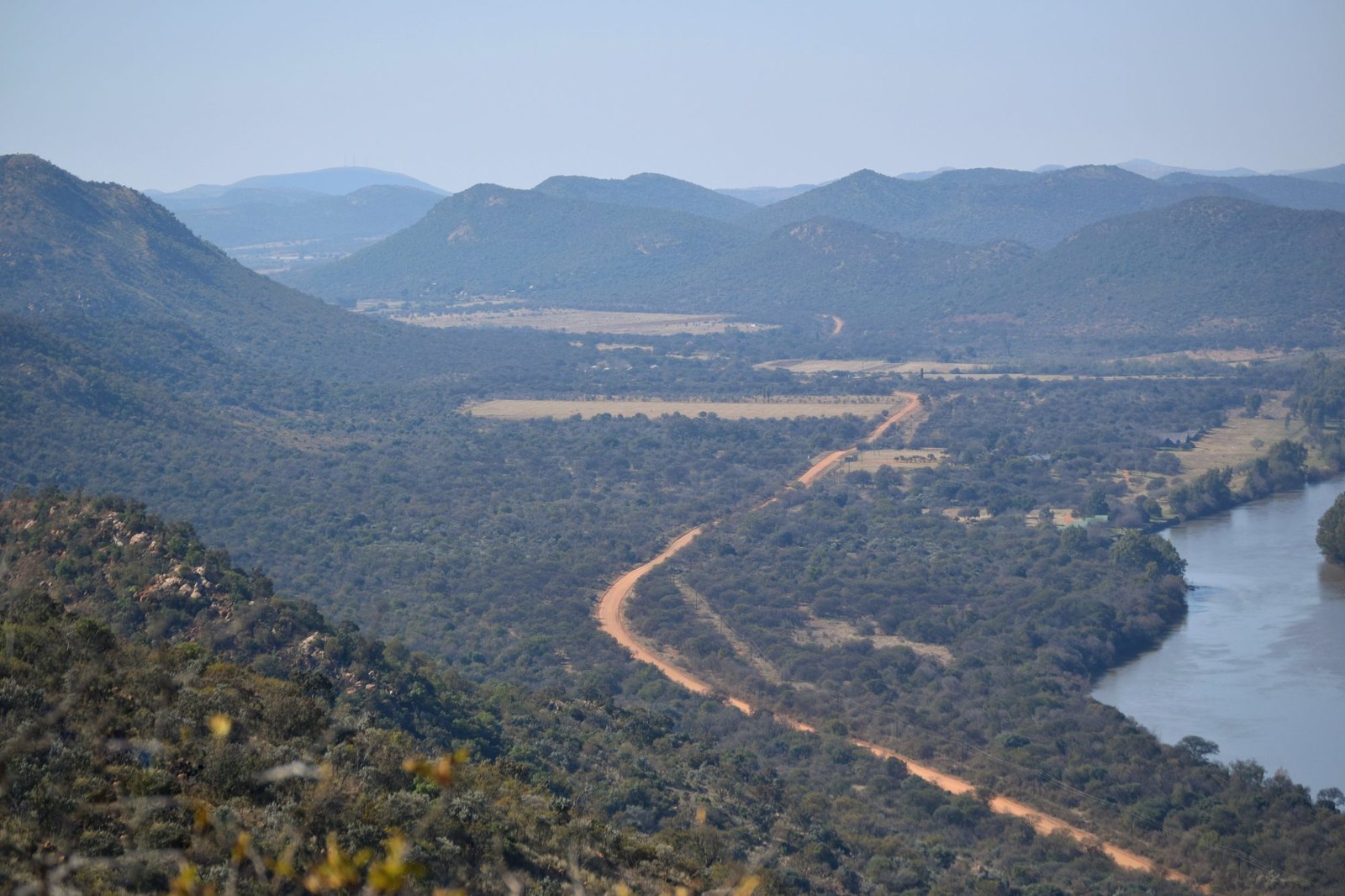
Follow anything in the dome for long enough and it leads to the river. The Vaal cuts along the northern boundary, through the collar hills, and it is the single largest reason this landscape holds the wildlife it does. In a dry highveld winter it is the only permanent water for a long way in any direction. Everything comes to it eventually.
That makes the river the trust's first conservation priority, even though a river is not an animal and does not photograph like one.
The pressures on it are not mysterious. Upstream of the dome sits one of the most industrialised, most densely populated catchments in the country. Treated and untreated sewage from under-maintained municipal works, agricultural run-off carrying fertiliser and pesticide, and mine drainage all arrive here having been someone else's problem first. Add nutrient-rich water to slow-moving reaches and you get the visible symptom everybody in Parys recognises: mats of water hyacinth thick enough to walk on, choking off light and oxygen beneath them.
What that does to wildlife is indirect and total. Low oxygen kills invertebrates. No invertebrates means no small fish. No small fish means the kingfishers, the herons, the otters and the finfoot have no reason to be on that stretch of bank. Riparian birds are the honest indicator here: they leave quietly and they come back slowly, and they do not care what any report says.
The work we can do is local, and it is unglamorous. Clearing hyacinth and cleaning banks, by hand and by boat. Keeping alien trees out of the riparian strip so that indigenous reeds and sedges can hold the bank together. Walking the tributaries and drainage lines after rain to see what has been washed in. Recording what we find, consistently and in the same places, so that the record is worth something in five years.
We are also honest about the limit. The trust cannot fix a municipal treatment works and cannot regulate an upstream mine. What we can do is hold our own stretch in the best condition it can be in, document the state of it properly, and be a credible voice with the people who do hold those levers. Long-term data collected the same way every season is the most useful thing a small organisation can put on the table.
This is the work behind our current appeal for a boat. Long reaches of the river here are simply not reachable on foot — steep banks, private land on both sides, reed-beds you cannot get through. Hyacinth clearing, bank surveys, water sampling and bird counts all currently happen wherever we can put a vehicle, which is not the same as wherever the work is needed.
If you want to understand this place, spend a morning on the water rather than in it. The dome makes sense from the river. So does the urgency.