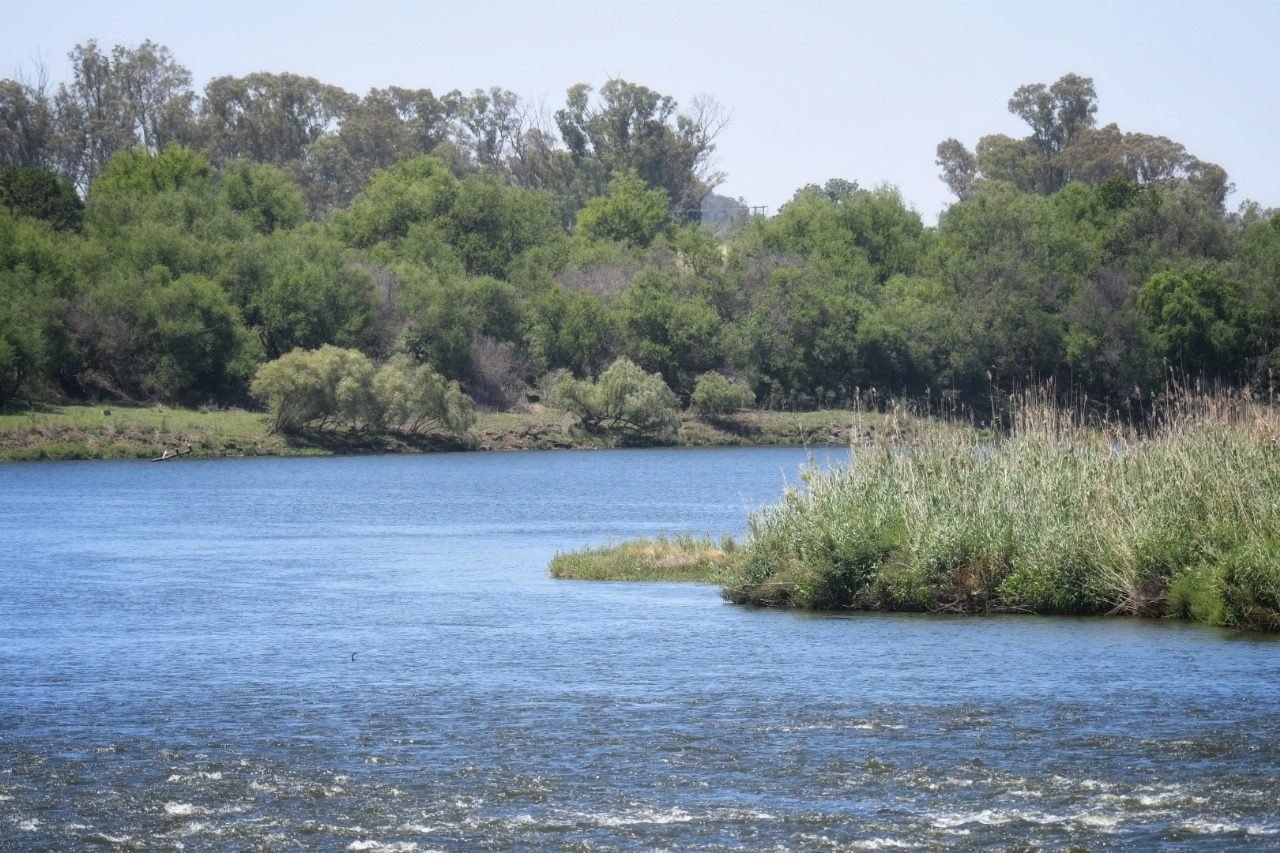
Nobody donates to a wildlife trust because of a tree. But if you asked our team which single threat does the most quiet damage across the widest area of the dome, the answer would not be poaching. It would be plants.
The main offenders are familiar to anyone who farms here. Black wattle and other Australian acacias, which colonise drainage lines and turn open riverbank into impenetrable thicket. Poplar and eucalyptus, planted generations ago for shade and timber and long since escaped. Syringa, prickly pear, bugweed, famine weed. And on the water, hyacinth and other floating aliens that carpet slow reaches whenever nutrients allow.
Their damage runs along three lines.
They drink. Dense alien stands along a watercourse consume far more water than the indigenous vegetation they replace. On a highveld river in a dry winter, that difference is not academic — it is stream flow that reaches downstream users and wildlife, or does not.
They erase habitat. Highveld grassland is not empty ground waiting for trees. It is an ancient, species-rich system, and much of the dome's smaller wildlife — the ground-nesting birds, the reptiles, the rodents that everything else eats — depends on open grass with the right structure. A wattle thicket supports almost none of it. The loss is invisible unless you were counting before.
They change how the land burns. Alien stands carry far more fuel than grassland, so a fire that would have moved through quickly instead burns hot and long, sterilising soil, killing indigenous trees that would otherwise have survived, and putting neighbouring farms at real risk. Then the cleared ground is bare, and the aliens come back first.
Clearing is not a project with an end date. It is a cycle: fell, treat the stumps so they do not coppice, remove the fuel load, then return in the following seasons to catch the seedlings that come up from a seed bank that can stay viable in the soil for years. Land cleared once and left alone reverts. Half of the work is follow-up, and follow-up is the part everyone underestimates.
It is also work that suits volunteers and neighbours better than almost anything else we do. It needs hands, a few good tools, a bakkie and a plan for which line to work up. There is no substitute for a group of people spending a Saturday on a drainage line, and there is very little that changes a piece of ground as visibly within one season.
If you want to help with something concrete — where you can stand at the end of the day and see exactly what you did — this is it. Contact us and we will put you on the list for the next clearing weekend.